NRF 2026: The Retail Reset Is Not a Technology Story. It Is an Execution Story
By Matt Short, Vice President of Customer Success, Badger Technologies
I came to NRF this year with a simple objective. Listen closely to what retail leaders are actually wrestling with as they plan for 2026.
- Not the headlines.
- Not the hype cycles.
- Not just the product launches.
- The operational truth.
Across conversations with retailers, partners, and operators, one theme kept surfacing in different forms.
Retailers are not short on ambition; They are short on execution capacity.
Many teams have invested heavily over the past several years in systems, analytics, and automation designed to improve performance. Those investments have created unprecedented visibility into store conditions.
Yet inside stores, the familiar issues persist:
- Out-of-stocks
- Pricing errors
- Misplaced items
- Shrink exposure
- Safety risks
What NRF reinforced for me is that the challenge is no longer access to information. It is the ability to focus attention and turn that information into consistent action without adding complexity for store teams.
That is the Retail Reset taking shape.
What I Heard at NRF: More Data Has Not Delivered Better Outcomes
When I talk with store operations leaders, their frustration is not that they cannot see problems. It is that they are drowning in signals.
Dashboards refresh. Alerts stack up. Exception lists grow. Teams are asked to react to everything at once, often without a clear operating standard for what matters most right now.
That reality creates a pattern I have seen repeatedly across retail.
Teams do not become less committed. They become more cautious.
When the cost of being wrong is high, verification becomes a default behavior:
- Associates re-walk aisles to confirm an out-of-stock
- Managers cross-check reports before redirecting labor
- Decisions wait until someone is confident enough to act
This is not laziness or resistance. It is rational behavior in an environment where signals are plentiful and confidence is inconsistent.
The result is not inaction. It is delay.
And delay is expensive, especially in the moments that shape shopper experience.
The Shift That Matters: From Expanding Insight to Improving Focus
One of the strongest takeaways from NRF was not a new category of technology. It was a shift in the questions leaders are asking.
Instead of “What else can we detect?” the questions sound more like this:
- Which signals actually lead to action?
- Which issues deserve attention first?
- How do we improve execution without adding work for store teams?
- How do we make our existing investments pay off inside the store, every day?
These are not questions about capability. There are questions about operating discipline.
The next phase of automation is not about doing more. It is about helping retailers concentrate attention where it matters most. That requires three things:
- Validation of real conditions
- Teams need confidence that what they are seeing reflects the shelf and the store right now, not yesterday’s assumptions.
- Less noise
- If everything is urgent, nothing is prioritized. Retailers are pushing for fewer signals that are higher confidence and easier to act on.
- Clear prioritization
- Store teams do not need longer lists. They need to know where to start, what to address next, and what can wait.
This is what I mean by focused automation. Not technology for technology’s sake, but automation designed to protect attention and strengthen execution.
What Actually Changes When Focus Improves
As someone who has spent time in store operations and led teams responsible for execution, I always come back to a practical test.
When focus improves, what changes inside the store?
- Teams move sooner. Trusted signals reduce the lag between detection and correction.
- Store leaders coach more and triage less. Leaders get back to developing people, building culture, and improving routines.
- The store becomes more consistent. Retailers win when execution becomes predictable across the fleet, not when one store has a great day.
- Investments start to show value where it counts. ROI shows up when store teams can execute with confidence and less friction.
This is what NRF clarified for me. The industry is moving away from dreams of perfect data and toward objectives teams can achieve, measure, and sustain inside the store.
The Customer Success View: Technology Only Matters If It Holds Up in the Aisle
In customer success, we live in the gap between strategy and reality.
- We see where programs lose momentum at the shelf.
- We see where tools create friction instead of removing it.
- We also see what happens when solutions are built around the realities of store work.
Retail is a people business. Store teams already carry enormous responsibility.
- Focused automation should make their jobs simpler, not harder.
- It should reduce debate, not create more.
- It should help teams act with confidence, not force constant verification.
If it does not do that, it does not matter how advanced it is.
The Retail Reset for 2026: Turning Investment Into Execution
NRF is often called Retail’s Big Show, but what I walked away with was something more grounded.
Retailers are no longer impressed by the volume of insight a platform can generate. They are evaluating whether that insight can be trusted and acted on.
The reset is not about doing more. It is about executing better.
- It is about narrowing attention to the signals that drive action.
- It is about reducing verification drag that steals time from shoppers and teams.
- It is about ensuring technology investments translate into consistent execution at the shelf.
That is how retailers will drive value from what they have already invested in.
And that is the work that matters most heading into 2026.
Why the Shelf Becomes the Reference Point
One of the most important implications of this shift is where retailers go to determine what is true.
The shelf is where the shopper experience is realized. Availability, pricing, placement, and presentation converge in a physical space that often diverges from what systems assume is happening.
For decades, the shelf was treated as the endpoint of planning. Plans were built upstream. Execution was evaluated downstream. When results fell short, the shelf was where problems were discovered, often too late to recover.
In 2026, that model begins to invert.
Retailers are increasingly anchoring execution decisions to observable conditions because it reduces uncertainty and speeds response. When action is grounded in what shoppers actually see, priorities become clearer. Teams spend less time reconciling and more time correcting issues while they still matter.
The shelf stops being a reconciliation point and becomes a reference point.
What This Means for Retail Operating Models in 2026
This shift changes more than task lists. It changes how operating models should be designed.
Retail operating models in 2026 will increasingly favor:
- Fewer signals with higher confidence
- Earlier intervention instead of after-the-fact explanation
- Prioritization that reduces cognitive load for store teams
- Faster movement from signal to action
This matters in an environment where labor remains constrained and expectations remain high. Every minute spent verifying is a minute not spent serving shoppers, coaching teams, or improving execution.
The retailers that perform best in 2026 will not be the ones with the most dashboards. They will be the ones with the clearest standards for what earns attention and the strongest discipline in turning insight into action.
Focus Turns Visibility Into Performance
Visibility alone does not improve execution. It creates the potential for improvement.
The difference is:
- Focus.
- Clear objectives.
- Trusted, decision-grade signals.
- Operating norms that allow teams to act without constant debate or repeated verification.
That is the retail reset heading into 2026.
The advantage is no longer seeing everything. It is seeing clearly, focusing decisively, and turning insight into action on the sales floor.
📄 Download the Digital Teammate Fact Sheet (PDF)
Schedule a Live Demo!
About Badger Technologies
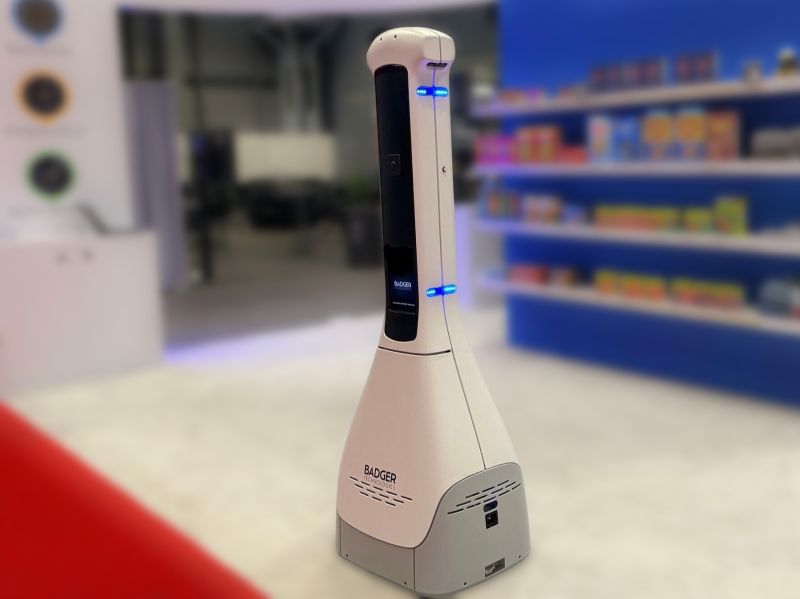
Badger Technologies, a product division of Jabil, is a leader in retail automation and artificial intelligence solutions. Its autonomous robots and digital teammates help retailers improve on-shelf availability, pricing accuracy, planogram compliance, and store safety.
With deployments across grocery, building supply, and other high-SKU retail environments, Badger Technologies provides retailers with real-time data and actionable insights that drive measurable results. Headquartered in Nicholasville, Kentucky, the company is committed to helping retailers build smarter, safer, and more efficient stores.