Peak Season Performance Begins With Verified Visibility
The Season That Reveals Everything
December exposes the truth inside every store. The pace changes as soon as shoppers begin their holiday buying. Inventory moves faster. Shelves empty more quickly. Small gaps that might go unnoticed in September turn into noticeable problems before lunch. Teams feel the pressure earlier in the day, and every decision carries more weight when aisles are full and expectations are high.
For many retailers, this period is a significant share of the year. Holiday sales in November and December typically account for a meaningful portion of annual retail revenue, and in some categories like toys, electronics, and jewelry it can be more than a quarter of yearly sales. According to the National Retail Federation, peak season is not only busy. It is the time when execution determines how much of that demand turns into profit.
Peak season does not introduce new challenges. It reveals the strain of challenges that have existed for years. Out-of-stocks, misplaced items, pricing inconsistencies, inaccurate counts, and the constant gap between what is recorded in the system and what is happening on the floor are not seasonal issues. They are everyday operational concerns that become more visible and more costly when traffic surges.
The Real Cause of Slowdowns
The real friction does not come from effort. Store teams work hard year-round. What slows stores down is uncertainty. Teams begin the day unsure whether the system reflects reality. They do not know which items have sold faster than expected, which have been misplaced by shoppers, or which price tags might need correction. The first hours of the day are spent walking aisles, investigating alerts, and responding to surprises instead of staying ahead of demand.
In peak season, that uncertainty turns into lost execution. Replenishment is delayed because teams are looking for product that is not where the system says it is. BOPIS orders take longer because pickers are chasing ghost inventory. Associates spend more time searching than serving. Leaders walk stores and see opportunities that plans did not anticipate.
As a result, retailers enter the busiest weeks of the year with limited clarity and a high risk of inconsistency. This uncertainty affects replenishment, order fulfillment, pricing compliance, safety, and overall shopper experience. When system records and shelf conditions do not match, teams lose time, shoppers lose confidence, and stores lose sales.
Why Verified Visibility Matters
Verified visibility helps remove that uncertainty and replaces guesswork with clarity.
Verified visibility connects digital inventory expectations with real shelf conditions. Instead of relying solely on periodic audits or manual walks, retailers gain continuous, trusted insight into what is actually happening on the floor. Shelves are scanned automatically. Empty facings are identified early. Misplaced items are surfaced quickly. Pricing concerns are captured before they create shopper frustration. Teams receive a clear list of priorities based on real shelf conditions, not assumptions.
This does more than save time. It strengthens execution during the most demanding period of the retail calendar. Accurate visibility supports faster replenishment, more precise order fulfillment, and stronger day-to-day consistency. It ensures that teams begin each day with reliable information so they can focus on customers instead of searching for product that is not where it should be.
The Cost of Inaccuracy During Peak Season
The cost of inaccuracy rises sharply in December. Shoppers expect shelves to be full, labels to be correct, and orders to be ready when promised. When something goes wrong, the impact is immediate.
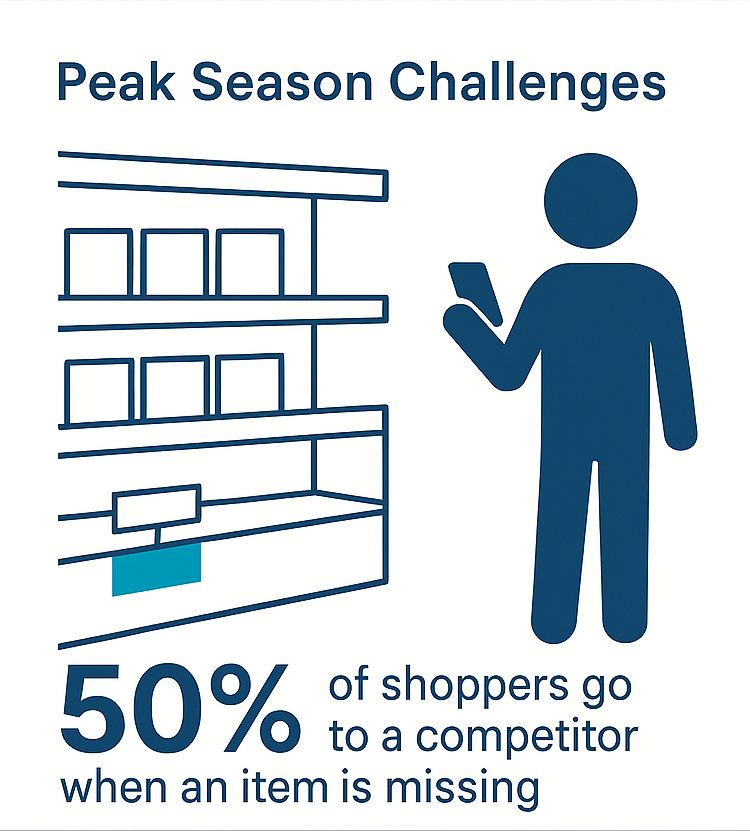
Nearly half of shoppers go to a competitor when the item they want is missing. (NielsenIQ). Many of these shoppers make that decision while still standing in the aisle. With the store’s own WiFi, they check availability somewhere else, place the order, and leave. A single gap can become a lost transaction in seconds.
At the same time, retailers rely on this period to carry a disproportionate share of the year’s performance. For some, the holiday quarter can make or break the entire year. When execution falters during these weeks, the financial impact is difficult to recover later.
Supporting BOPIS Accuracy and Speed
BOPIS accuracy becomes more fragile during peak season. High volumes place more pressure on fulfillment teams. When system records show inventory that is not on the shelf, orders must be adjusted at the last minute, canceled, or split. This disrupts workflow, frustrates shoppers, and increases labor strain.
Verified visibility confirms availability before orders are picked, reducing errors and helping teams stay on schedule. It gives fulfillment teams the confidence they need to work efficiently during the period when demand is highest. The result is better execution in the part of the operation that shoppers feel directly.
A Faster Path to Replenishment
Replenishment improves when teams know exactly where to focus. Instead of walking aisles looking for problems, associates begin with a clear list of tasks based on real shelf conditions. They know which items are missing, which have low facings, and which have shifted during high traffic. This allows stores to stay ahead of demand and respond to movement at the pace shoppers create it.
In peak season, this kind of targeted execution is what separates retailers who keep up with demand from those who constantly feel behind.
Strengthening Pricing Accuracy
Pricing accuracy is another area where verified visibility makes a measurable difference. During peak season, pricing confidence matters. Shoppers compare prices more closely. Promotions change more frequently. Inaccurate tags can create confusion or disappointment at checkout.
Verified visibility identifies price discrepancies early, reducing friction and strengthening shopper trust. It also supports compliance with internal standards and regulatory expectations, an area that draws more attention as basket sizes grow.
How Clarity Changes the Rhythm of a Store
Beyond individual tasks, verified visibility changes the rhythm of an entire store. Teams move with clarity instead of reacting to surprises. Managers have more time to support associates, assist shoppers, and oversee store performance. Associates spend less time searching for misplaced items and more time helping customers. The store becomes more predictable, more efficient, and better prepared for the day.
In peak season, this rhythm is what allows retailers to execute consistently from open to close. When teams know where to go and what to do, they can keep the store in shape even when traffic is nonstop.
Preparing for 2026
As retailers plan for 2026, the value of verified visibility becomes even more important. It is not only a tool for peak season. It is a foundation for year-round performance.
Every major operational priority benefits from clearer visibility. Merchandising teams rely on accurate data to evaluate planogram compliance. Asset protection teams rely on accurate counts to reduce shrink. Operations leaders rely on accurate visibility to forecast labor and prioritize investments. Retail media teams rely on real shelf conditions to support in-store measurement and performance.
Better decisions begin with better data, and better data begins with visibility retailers can trust.
The Growing Importance of Speed and Accuracy
Verified visibility also prepares retailers for a future where speed and accuracy are central to the shopper experience. Omnichannel expectations continue to rise. BOPIS, ship-from-store, and same-day delivery require a level of accuracy that manual processes cannot provide consistently. Shoppers expect real-time availability information, not estimates.
They expect orders to be accurate and ready when promised.
These expectations will not fade after the holidays. They will become baseline requirements for 2026 and beyond.
Visibility That Keeps Pace With the Shopper
Visibility also informs how retailers adapt to changing product movement patterns. Seasonal peaks, weather shifts, promotions, viral trends, and local events all influence how items move through a store. Without continuous insight, retailers cannot respond at the pace shoppers expect. Verified visibility turns these moments from unexpected disruptions into predictable, manageable tasks.
Looking Ahead to NRF 2026
As the industry prepares for NRF 2026, conversations will focus on accuracy, efficiency, shrink reduction, pricing confidence, and the growing need for real-time in-store visibility. Retailers want technology that integrates with daily operations, supports store teams, and translates data into clear, actionable priorities. They want solutions that strengthen their ability to serve shoppers and improve store performance without adding more complexity.
Entering 2026 With Confidence
Peak season will always bring intensity, but clarity changes how retailers move through it. When teams know what is on the shelf, where product has shifted, and which issues require attention, they stay ahead of demand instead of reacting to it.
Verified visibility gives retailers the control they need during the busiest weeks of the year and the foundation they need to begin 2026 with confidence.

📄 Download the Digital Teammate Fact Sheet (PDF)
Schedule a Live Demo!
About Badger Technologies
Badger Technologies, a product division of Jabil, is a leader in retail automation and artificial intelligence solutions. Its autonomous robots and digital teammates help retailers improve on-shelf availability, pricing accuracy, planogram compliance, and store safety.
With deployments across grocery, building supply, and other high-SKU retail environments, Badger Technologies provides retailers with real-time data and actionable insights that drive measurable results. Headquartered in Nicholasville, Kentucky, the company is committed to helping retailers build smarter, safer, and more efficient stores.