Data-Driven Predictions for 2026
By Emil Martinez, CEO, Badger Technologies
For most of my career, progress in retail has been measured by how much more data we could generate.
I entered this industry at a time when simply having consistent, syndicated measurement was considered a competitive advantage. Over the years, I have worked across nearly every layer of the retail data ecosystem, from global measurement and shopper insights to enterprise technology consulting, data standards, and large-scale digital transformation. In every role, the belief was largely the same. Better data would lead to better decisions. Better decisions would lead to better execution.
In many ways, that belief proved true. Retail today is more instrumented, more modeled, and more analytically sophisticated than it has ever been. Organizations can see deeper into consumer behavior, inventory movement, pricing dynamics, and promotional performance than was imaginable even a decade ago.
And yet, as retailers prepare for 2026, a harder truth has become impossible to ignore.
Retailers are not struggling because they lack data. They are struggling because too much of the data they rely on fails them at the moment decisions actually need to be made.
The problem is no longer access. It is confidence.
When Data Stops Accelerating Decisions
Spend time inside stores, distribution centers, or with the teams responsible for daily execution, and a familiar pattern appears quickly. Decisions are delayed not because information is unavailable, but because teams are unsure whether that information reflects reality right now.
Inventory shows as available in the system but cannot be found on the shelf. Prices are updated in files but not on tags. Items technically exist in the building but are inaccessible to the shopper. Reports explain what should be happening while associates and managers respond to what is actually happening.
As a result, effort shifts away from execution and toward verification. Associates search. Managers double-check. Leaders debate which numbers to trust. Performance conversations become exercises in explaining variance rather than improving outcomes.
This is not a failure of effort or commitment. Store teams work incredibly hard. It is the natural consequence of operating with data that is increasingly disconnected from the physical complexity of modern stores.
For years, retailers responded to this challenge by adding more data. More reports. More dashboards. More alerts. But volume does not resolve ambiguity. In many cases, it amplifies it.
The Shift From Accumulation to Discipline
As retailers enter 2026, a quiet but meaningful shift is underway. Organizations are becoming more disciplined about which data is allowed to drive execution.
For much of the past two decades, the goal was to capture everything. Today, the goal is to determine what actually matters. Retailers are asking harder questions of their data than ever before.
- Does this signal reflect the physical state of the store as it exists now?
- Can it be validated quickly without sending someone to investigate?
- Does it reduce uncertainty for store teams or introduce more debate?
- Does it help someone decide what to do next?
If the answer is no, that data may still have analytical value, but it will no longer be allowed to slow execution.
This is not a rejection of analytics. It is a sign of maturity.
Why the Shelf Becomes the Reference Point
One of the most important implications of this shift is where retailers look for truth.
For decades, the shelf has been treated as the endpoint of the supply chain. Plans are built upstream. Systems make assumptions. Execution is measured downstream. When outcomes fall short, the shelf is where problems are discovered, often too late.
In 2026, that model begins to invert.
Retailers are increasingly anchoring decisions to what is observable at the shelf because that is where strategy meets reality. Availability, pricing, placement, and presentation all converge in the same physical space. It is where shoppers make decisions and where performance is ultimately realized.
This does not mean abandoning planning systems or enterprise analytics. It means grounding them.
When decisions are informed by early, continuous awareness of shelf conditions, organizations spend less time explaining performance after the fact and more time influencing it while it still matters.
The shelf stops being a reconciliation point and becomes a reference point.
Price Accuracy Moves Into the Performance Conversation
Pricing is another area where this shift is becoming visible.
Historically, price accuracy has been treated primarily as a compliance issue.
- Were tags updated?
- Were audits passed?
- Were errors corrected eventually?
But pricing errors do more than create operational friction. They erode trust.
Shoppers notice discrepancies. Associates spend time resolving issues at checkout. Promotions underperform when expectations do not align with reality.
As assortments turn faster and promotional complexity increases, periodic audit cycles are no longer sufficient. In 2026, price integrity moves firmly into the performance conversation.
Retailers will increasingly evaluate pricing accuracy in terms of its impact on conversion, customer confidence, and brand perception. Continuous awareness becomes essential because the cost of being wrong, even briefly, has grown.
Shrink Signals Used Earlier, Not Explained Later
Shrink remains one of the most persistent challenges in retail, but how organizations use shrink-related data is changing.
For years, the emphasis has been on post-event analysis. Loss is measured, categorized, and debated long after it occurs. While that analysis is important, it does little to prevent loss from happening in the first place.
In 2026, retailers will place greater emphasis on early operational signals that suggest exposure risk. Persistent shelf gaps, misplaced items, and repeated execution breakdowns will be treated as indicators worth addressing before loss accumulates.
This approach allows organizations to intervene earlier, focus attention more precisely, and avoid blanket controls that burden store teams without improving outcomes. Shrink management becomes more preventative and operational, rather than purely financial.
Speed to Action Becomes the Measure of Data Value
Perhaps the most consequential shift heading into 2026 is how retailers evaluate the success of their data strategies.
In the past, the most valued systems were often those that explained the most. Depth of analysis was equated with sophistication. Complexity was tolerated because it promised insight.
Today, retailers are asking different questions.
- How quickly can teams move from signal to action?
- Are issues prioritized clearly or do they require debate?
- Does data reduce cognitive load for store teams or add to it?
- Does it help people act with confidence or force them to second-guess?
In this environment, speed to action becomes the defining metric. Systems that slow decision-making, even if analytically advanced, will lose favor. Practical utility will outweigh theoretical precision.
What This Means for Retailers Entering 2026
Retailers entering 2026 face familiar pressures. Labor remains constrained. Shoppers remain demanding. Margins remain tight. Volatility remains the norm.
What changes is how retailers respond.
The organizations that perform best will not chase every new data source. They will narrow their focus to signals that consistently reflect reality and drive action. They will design operating models that reduce verification work, shorten response cycles, and give store teams clarity about where to start.
They will stop asking for more data and start asking better questions of the data they already have.
A More Mature Definition of Data-Driven Retail
Being data-driven in 2026 will not mean having the most dashboards or the most sophisticated models. It will mean having the fewest arguments about what is true.
It will mean trusting a smaller set of decision-grade signals, ignoring noise that does not improve outcomes, and building operations around the realities of the store rather than the assumptions of the system.
The retailers that succeed next year will not be the ones who see everything. They will be the ones who see clearly, act decisively, and align their decisions with what is actually happening inside their stores.
Clarity, not quantity, will define retail performance in the year ahead.

📄 Download the Digital Teammate Fact Sheet (PDF)
Schedule a Live Demo!
About Badger Technologies
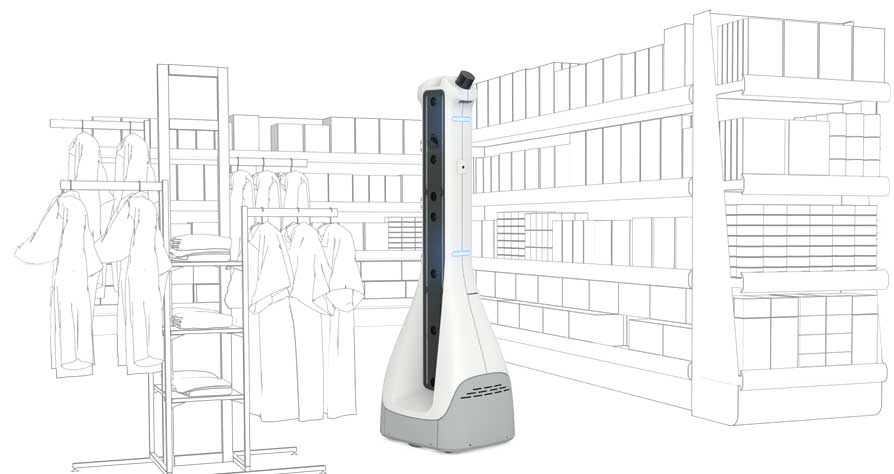
Badger Technologies, a product division of Jabil, is a leader in retail automation and artificial intelligence solutions. Its autonomous robots and digital teammates help retailers improve on-shelf availability, pricing accuracy, planogram compliance, and store safety.
With deployments across grocery, building supply, and other high-SKU retail environments, Badger Technologies provides retailers with real-time data and actionable insights that drive measurable results. Headquartered in Nicholasville, Kentucky, the company is committed to helping retailers build smarter, safer, and more efficient stores.