From Insight to Impact: What Actually Changes Inside Stores When Focus Improves
By Len Wierzbicki, Head of Strategy and Marketing, Badger Technologies
Retailers have spent the past several years investing heavily in visibility. New systems, more analytics, and emerging forms of automation have increased awareness of what is happening inside stores. Today, most retailers have more insight into store conditions than ever before.
Yet, when you spend time with store teams, a familiar frustration surfaces.
- Execution still feels fragile.
- Out-of-stocks sit longer than they should.
- Pricing issues often reach shoppers before associates.
- Safety risks compete with dozens of other priorities.
- Store leaders spend more time confirming conditions than correcting them.
The challenge is no longer seeing what is happening. It is deciding what deserves attention first and acting with confidence.
When Visibility Outpaces Focus
Inside stores, too many signals create a predictable pattern. Teams do not disengage. They become cautious.
When alerts stack up and priorities are unclear, verification replaces action. Associates re-walk aisles to confirm an issue before responding. Managers cross-check reports before redirecting labor. Decisions wait until someone feels confident enough to move.
This behavior is rational. Acting on incomplete or conflicting information carries risk, especially in environments where time and labor are limited.
The result is not inaction. It is delay.
And delay affects the moments that shape the shopper experience.
What Changes When Focus Improves
When focus improves, execution shifts in clear and measurable ways.
Work starts earlier and finishes faster because teams know exactly where to begin. Replenishment becomes routine rather than recovery. Pricing and safety issues surface closer to the moment they appear.
Just as importantly, confidence returns. Leaders spend less time reconciling information and more time coaching execution. Associates move sooner on the issues that matter most. Daily work gains rhythm and loses friction.
These improvements do not require perfect data. They come from clearer priorities and trusted signals that reflect what is actually happening at the shelf.
Why This Is About Consistency, Not Perfection
A common misconception in retail is that strong execution requires complete information. In practice, it does not.
Store teams need decision-grade clarity. They need fewer signals they can trust, clearer guidance on where to start, and confidence that acting now is better than waiting for certainty.
Retailers that execute well are not the ones with the most dashboards. They are the ones who reliably convert insight into action without overwhelming store teams.
Consistency matters more than completeness.
Why This Matters Now
As retailers plan for 2026, execution capacity is becoming a central consideration. Teams are asked to do more with limited time and attention. Expectations for availability, accuracy, and safety remain high.
Every minute spent verifying conditions is a minute not spent improving the store or serving shoppers.
The retail reset is not about adding more technology. It is about focusing better. It is about protecting attention, reducing noise, and enabling teams to act with confidence where the shopper experience is created.
When focus improves, the shelf becomes the reference point. Action replaces debate. Execution becomes steadier and more predictable across stores.
That is when investment begins to translate into impact. And that is the work that will matter most in the years ahead.
Why the Shelf Becomes the Reference Point
One of the most important implications of this shift is where retailers go to determine what is true.
The shelf is where the shopper experience is realized. Availability, pricing, placement, and presentation converge in a physical space that often diverges from what systems assume is happening.
For decades, the shelf was treated as the endpoint of planning. Plans were built upstream. Execution was evaluated downstream. When results fell short, the shelf was where problems were discovered, often too late to recover.
In 2026, that model begins to invert.
Retailers are increasingly anchoring execution decisions to observable conditions because it reduces uncertainty and speeds response. When action is grounded in what shoppers actually see, priorities become clearer. Teams spend less time reconciling and more time correcting issues while they still matter.
The shelf stops being a reconciliation point and becomes a reference point.
What This Means for Retail Operating Models in 2026
This shift changes more than task lists. It changes how operating models should be designed.
Retail operating models in 2026 will increasingly favor:
- Fewer signals with higher confidence
- Earlier intervention instead of after-the-fact explanation
- Prioritization that reduces cognitive load for store teams
- Faster movement from signal to action
This matters in an environment where labor remains constrained and expectations remain high. Every minute spent verifying is a minute not spent serving shoppers, coaching teams, or improving execution.
The retailers that perform best in 2026 will not be the ones with the most dashboards. They will be the ones with the clearest standards for what earns attention and the strongest discipline in turning insight into action.
📄 Download the Digital Teammate Fact Sheet (PDF)
Schedule a Live Demo!
About Badger Technologies
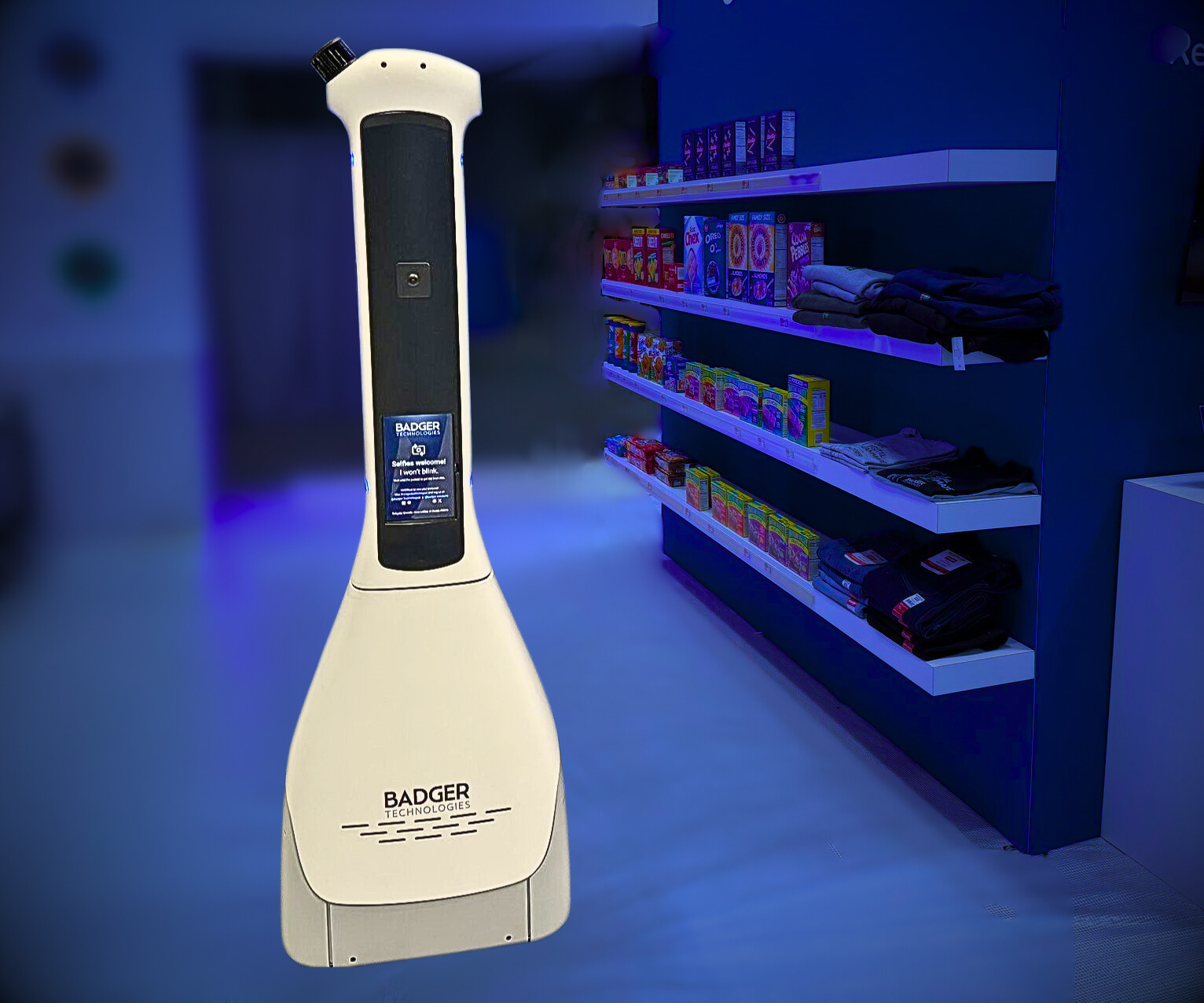
Badger Technologies, a product division of Jabil, is a leader in retail automation and artificial intelligence solutions. Its autonomous robots and digital teammates help retailers improve on-shelf availability, pricing accuracy, planogram compliance, and store safety.
With deployments across grocery, building supply, and other high-SKU retail environments, Badger Technologies provides retailers with real-time data and actionable insights that drive measurable results. Headquartered in Nicholasville, Kentucky, the company is committed to helping retailers build smarter, safer, and more efficient stores.